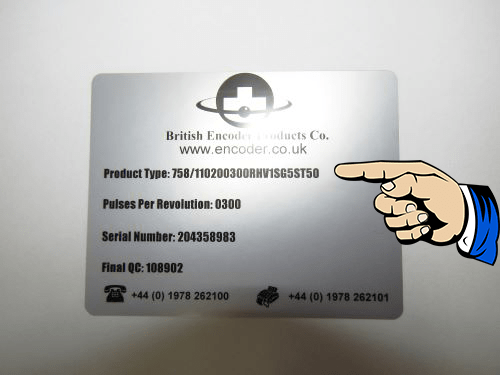
BEPC is often asked, “Why are your part numbers so long?” The answer is that BEPC’s encoders are highly configurable sensing devices with many features and options. These features and options must be called out by the customer so the encoder works properly in its intended application, and so it can do its job correctly. […]
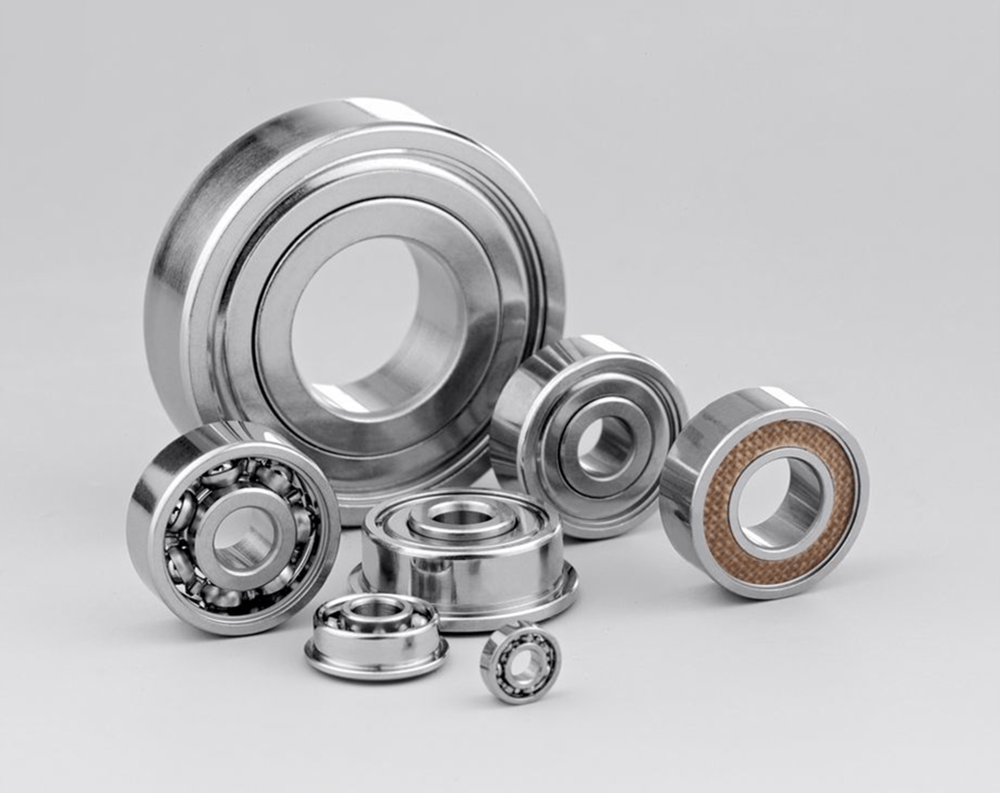
The mechanical life of an encoder is mainly determined by the life of the unit’s bearings. Several factors affect bearing life, including shaft loading, heat, ingress, and rotational speed. Shaft Loading Shaft loading is likely the top cause of premature bearing failure. There are two types of loading to consider: radial and axial. Radial loading […]
Modular Rotary Encoders Vs. Bearing Encoders Axial Motor Shaft Movement (End Float or End Play) End float refers to the amount of axial movement in the motor shaft. There are a number of factors that can contribute to axial motor shaft movement including part tolerances, bearing pre-load method, thermal expansion, and bearing wear over time. […]
The output type for an encoder is an important consideration when specifying an encoder for a motion control application. The first consideration is the number of output channels, and the second consideration is the receiving device. Encoder – A Definition An encoder is an electro-mechanical device that translates mechanical motion into electrical signals. There are […]
For Encoders in Motion Control Applications To ensure clarity of signal from your encoder, and avoid excessive electrical noise, there are several options and installation considerations to take into account. Electrical noise must be mitigated, and there are several strategies to do that. The encoders’ cables are another important consideration, with cable length, termination, and […]
Industrial communications like all technologies, have undergone significant changes. Industry was once dominated by serial networks that utilized the technology that served the contemporary needs of the marketplace. Higher speeds and greater throughput are now needed to facilitate new, more sophisticated slave devices, end-node equipment, together with new applications. As a result, industrial communications equipment […]
To provide the best experiences, we use technologies like cookies to store and/or access device information. Consenting to these technologies will allow us to process data such as browsing behaviour or unique IDs on this site. Not consenting or withdrawing consent, may adversely affect certain features and functions.
Functional
Always active
The technical storage or access is strictly necessary for the legitimate purpose of enabling the use of a specific service explicitly requested by the subscriber or user, or for the sole purpose of carrying out the transmission of a communication over an electronic communications network.
Preferences
The technical storage or access is necessary for the legitimate purpose of storing preferences that are not requested by the subscriber or user.
Statistics
The technical storage or access that is used exclusively for statistical purposes.The technical storage or access that is used exclusively for anonymous statistical purposes. Without a subpoena, voluntary compliance on the part of your Internet Service Provider, or additional records from a third party, information stored or retrieved for this purpose alone cannot usually be used to identify you.
Marketing
The technical storage or access is required to create user profiles to send advertising, or to track the user on a website or across several websites for similar marketing purposes.